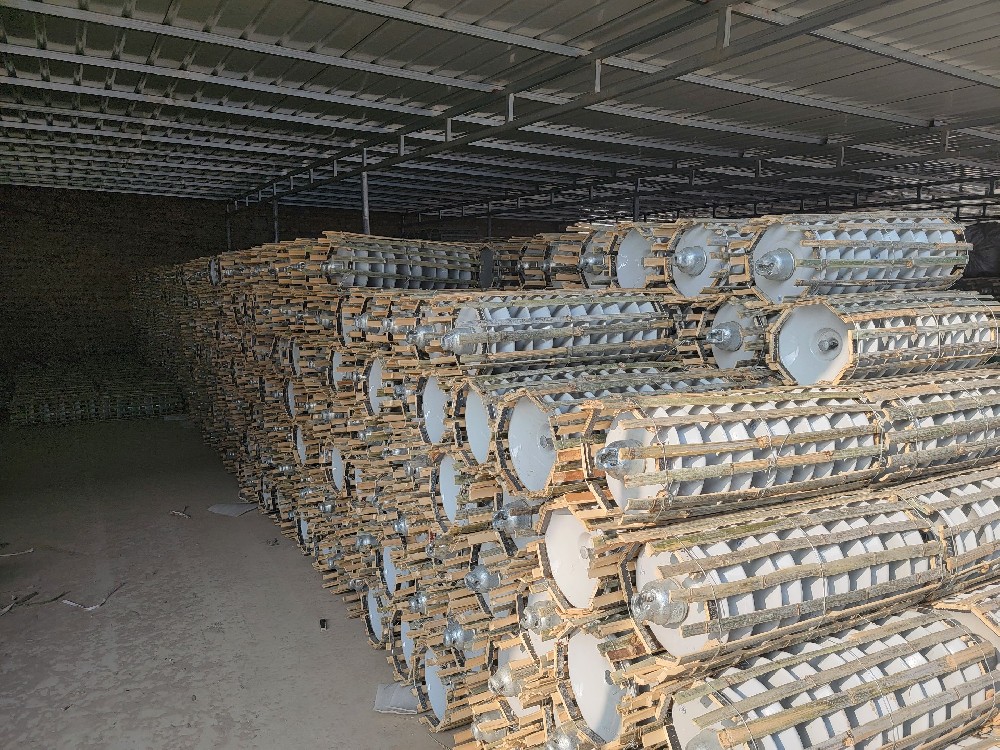
The production process of porcelain insulators mainly includes the following steps 2:
The production process of porcelain insulators mainly includes the following steps 2:
Raw material preparation: Grind and purify raw materials such as pottery stone, feldspar, clay, alumina, etc., including steps such as ball milling, screening, and mud pressing.
Molding: including vacuum refining, molding, refining, and drying. Vacuum mud refining is the use of a vacuum mud refining machine to remove bubbles from the mud material and form solid mud segments. The molding process involves using a mold to press the clay into the shape of an insulator, and then repairing the clay to ensure that the shape meets the requirements. At this time, there is a high amount of water content inside the mud pit, and the moisture in the mud pit will be reduced to about 1% through drying.
Glazing: There are processes such as immersion glazing and spray glazing. Sand coating is used to cover the head of the ceramic component at the assembly position with sand particles, with the aim of increasing the contact area and friction between the ceramic component and the adhesive, and improving the connection strength between the ceramic component and the metal component.
Firing: Place the porcelain pieces in a kiln for firing, and then screen them through visual inspection, internal water pressure test, etc. to ensure the quality of the porcelain pieces.
Assembly: After firing, assemble the steel cap, steel foot, and ceramic parts, and then inspect them one by one through mechanical tensile testing, electrical testing, etc.